Phuket’s most striking landmark, the Big Buddha, rises high above the island’s southern ridge, its gleaming white marble visible for miles across the Andaman Sea.
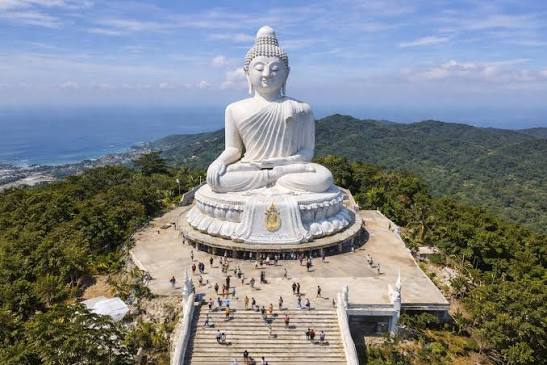
Perched on Nakkerd Hill between Karon, Kata and Chalong Bay, the seated figure stands 45 metres tall and 25 metres wide, making it one of Thailand’s tallest Buddha statues. Built from reinforced concrete and clad in Burmese white marble, the statue depicts Gautama Buddha in the earth‑touching Maravija posture, a familiar pose across Thai temples.
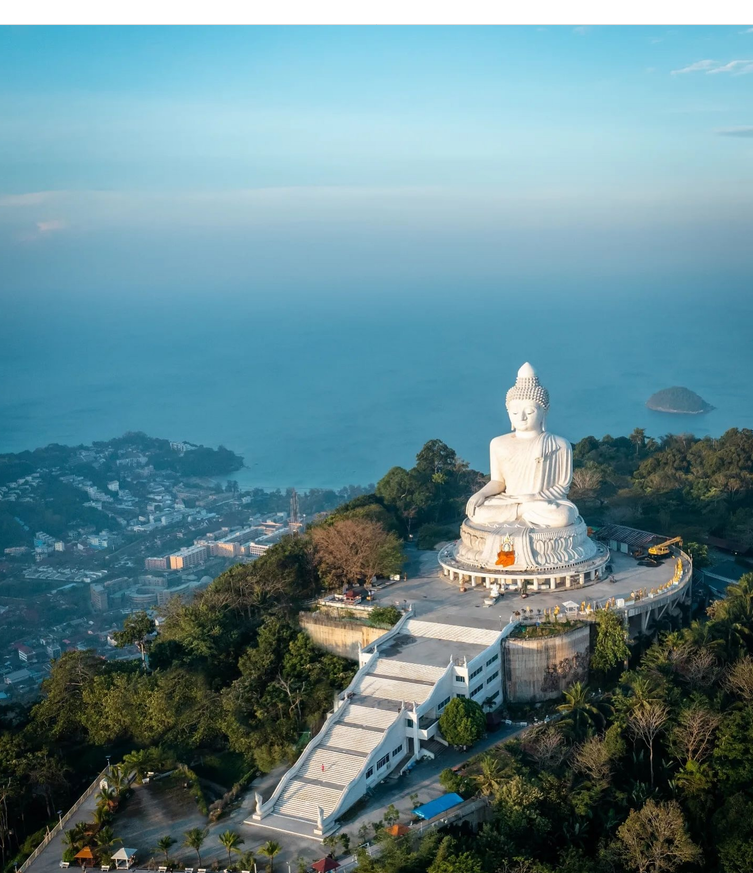
Construction began in 2004 after years of planning, with the main figure completed by the late 2000s. Work on the surrounding terrace, shrines and halls has continued in stages, funded largely by donations from visitors and locals. Stones and plaques around the site mark contributions, reflecting the community effort behind the project.
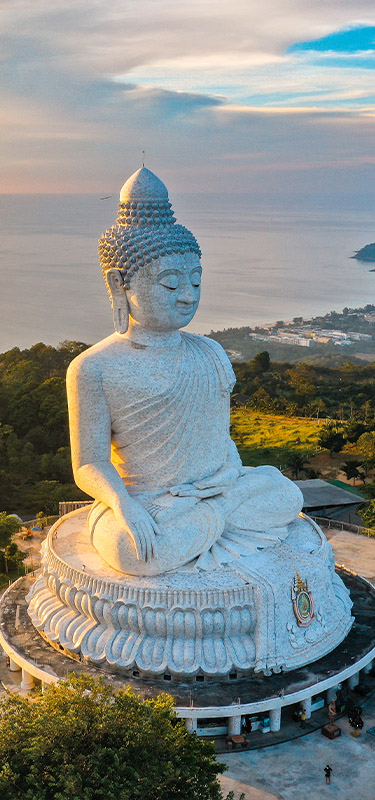
The official name, Phra Phutta Ming Mongkol Eknakiri, translates as “the Cherished Auspicious Lord Buddha atop Naga Hill”. At nearly 400 metres above sea level, the hilltop complex offers sweeping views of southern Phuket and, on clear days, the islands scattered offshore.
Visitors reach the site via a steep road from the Chalong Roundabout, climbing through forest to the main car park and terraces. The temple precinct includes Wat Kitthi Sangkharam, smaller shrines, donation areas and platforms lined with additional Buddha images. A darker‑toned statue nearby provides a striking contrast to the main white figure.
Ranked among the tallest Buddha statues in Thailand, Big Buddha Phuket has become both a spiritual centre and a tourist attraction. Its combination of scale, marble cladding and panoramic setting makes it a distinctive presence on the island’s skyline, drawing worshippers and travellers alike.
About the Author