In the quiet village of Chongshan near Suzhou, generations of artisans have carved Buddhist and Taoist statues for temples across China. Today, their craft is fading.
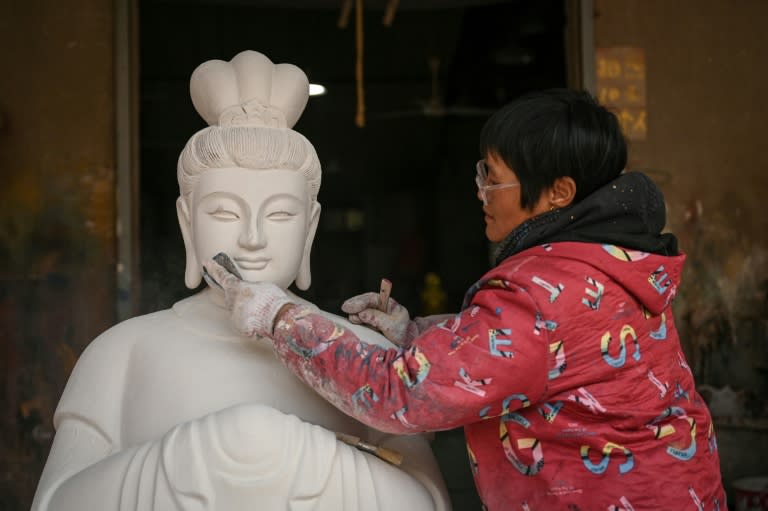
Inside a dim workshop, master woodcarver Zhang shapes a block of wood into a foot, surrounded by half-finished Buddha figures. He learned the art as a teenager from his father, continuing a family line that stretches back several generations. Yet he worries the tradition will die with his peers. “Once our generation retires, there will be no one left to carry on,” he told AFP.
The reasons are stark: low pay and the years of training required deter younger people. “You need to do this for at least five or six years before you can set up shop on your own,” Zhang explained.
The craft once thrived. In the late 20th century, as restrictions on worship eased, temples across China commissioned new statues, creating a boom for Chongshan’s workshops. But now, with most temples already furnished, demand has slowed.
Gu, a 71-year-old artisan, recalls a very different era. During the Cultural Revolution, religion was suppressed and temples closed, forcing her to produce secular handicrafts instead. Today she carves Buddha heads, each with subtle expressions—smiling, crying, or even both at once, as in depictions of the eccentric monk Ji Gong.
For Gu, the artistry is a source of pride. For Zhang, it is simply a livelihood. “People look at us like we’re artists,” he said. “But to us, we’re just creating a product.”
As the market shrinks and apprentices vanish, Chongshan’s carvers face an uncertain future. Their fading workshops stand as reminders of a tradition once central to China’s religious revival, now struggling to survive in a modern economy.
About the Author