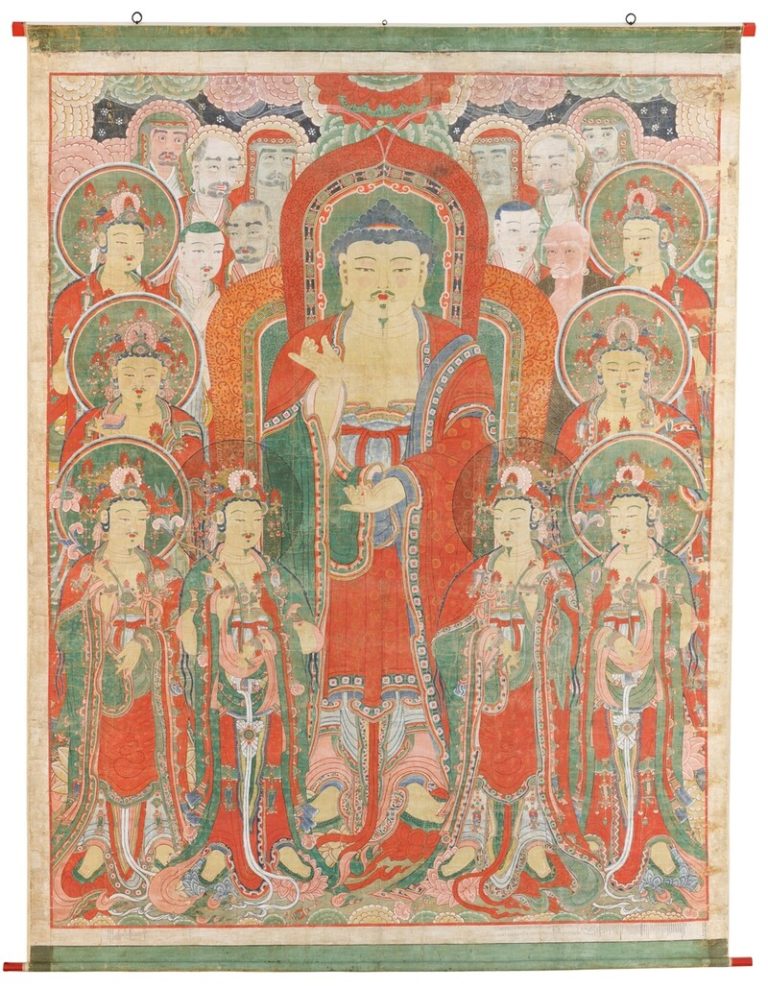
A monumental Buddhist artwork from Bongjeongsa Temple in Andong has gone on display at the National Museum of Korea, offering visitors a rare chance to see one of the largest ritual paintings of the Joseon era.
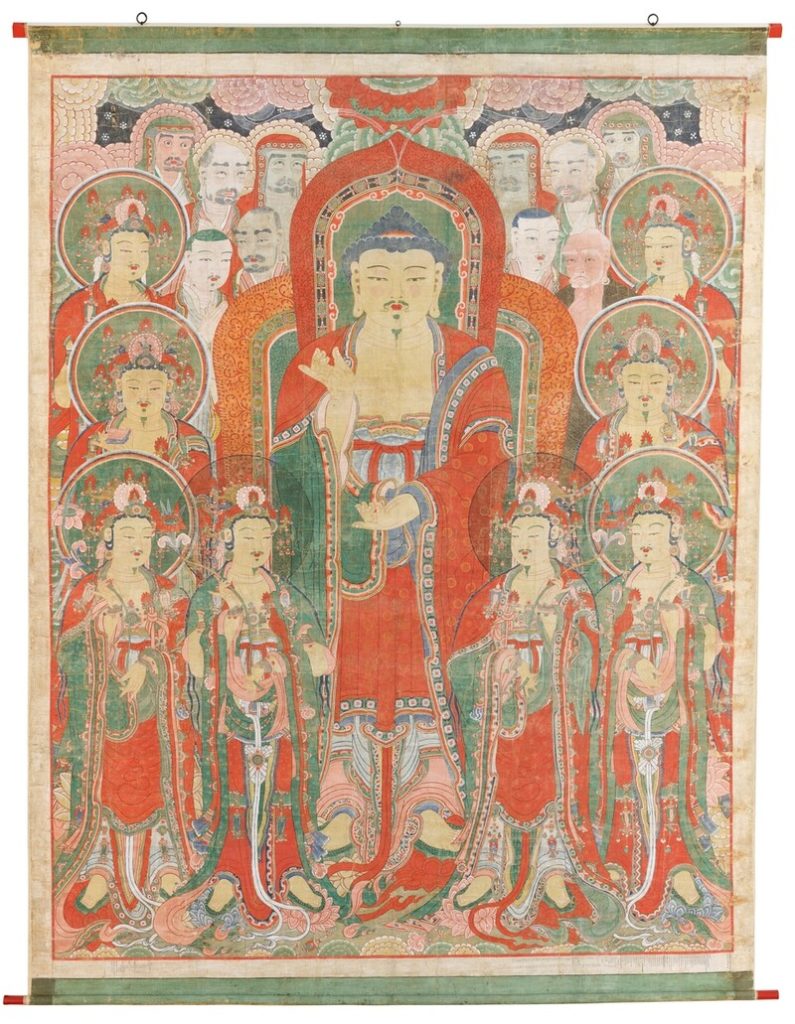
The “Hanging Painting of the Yeongsan Assembly,” created in 1710, stretches more than eight metres high and over six metres wide. It depicts Sakyamuni Buddha delivering his teachings, surrounded by bodhisattvas and disciples, with vivid shading techniques bringing a sense of movement to the figures. A distinctive gold-leaf swastika on the Buddha’s chest enhances the solemnity of the composition.
Traditionally hung in temple courtyards during major ceremonies such as Buddha’s Birthday, the painting was made by connecting 16 silk panels. It is regarded as the last known work of Domun, one of seven monk-painters credited with its creation, and stands as a representative piece of his artistic style.
The exhibition, titled “The Buddha Leading to Enlightenment: The Hanging Painting of Bongjeongsa Temple in Andong,” highlights the cultural and spiritual significance of such large-scale works, known as gwaebul. These paintings were central to outdoor rituals and reflect broad public participation in Buddhist practice at the time. Inscriptions record 166 donors, including women, underscoring the collective effort behind its creation.
Museum officials say the piece is invaluable for the study of Buddhist art and history, and hope visitors will engage with the teachings it embodies. The exhibition runs until 21 June in the museum’s Buddhist painting gallery.
About the Author