Uttar Pradesh’s Buddhist Circuit offers a journey through some of the most sacred places linked to the life of Gautama Buddha, weaving history, spirituality and heritage across northern India.
The circuit claims four of the eight holiest Buddhist sites. In Sarnath, just outside Varanasi, the Buddha delivered his first sermon in the Deer Park, setting the wheel of Dharma in motion. The Dhamek Stupa and the Lion Capital in the Sarnath Archaeological Museum remain powerful reminders of that moment.
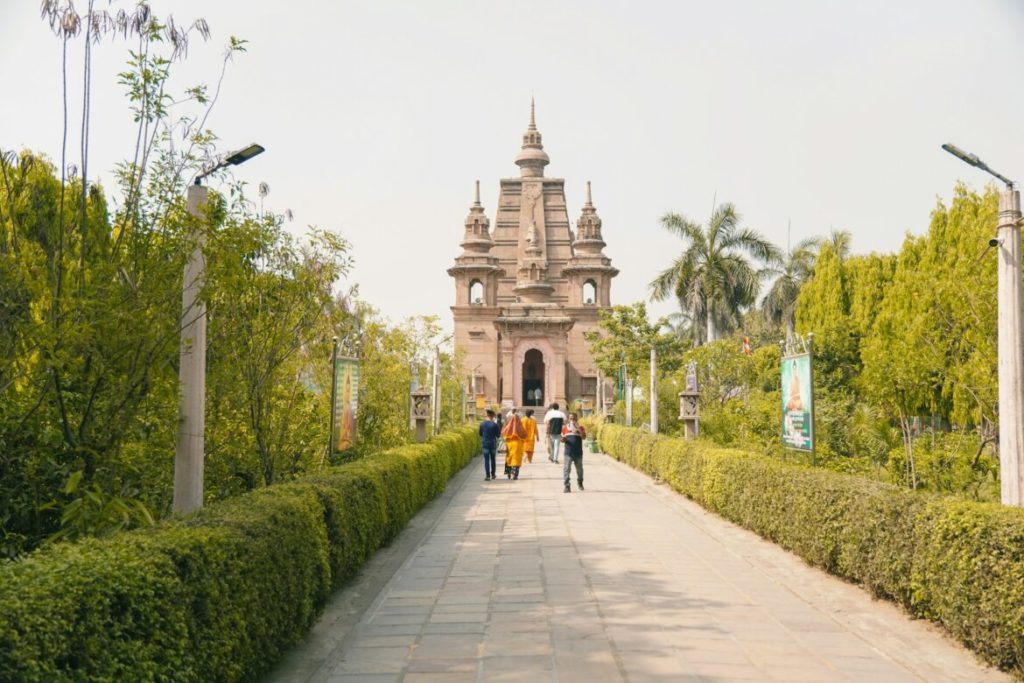
Farther east lies Kushinagar, where the Buddha attained Mahaparinirvana under two sal trees. The Mahaparinirvana Temple, with its reclining Buddha statue, and the Ramabhar Stupa, marking his cremation site, draw pilgrims from around the world.
To the north, Shravasti was the Buddha’s monsoon retreat for more than two decades. Here he performed miracles and taught at Jetavana Monastery. The ruins of stupas and monasteries still evoke the rhythm of monastic life.
Near the Nepal border, Kapilvastu (Piprahwa) recalls the Buddha’s princely youth. Archaeological finds, including stupas and relic caskets, mark the capital of the Shakya clan where Siddhartha lived before renouncing worldly life.
The circuit also includes Kaushambi, where the Buddha mediated disputes among monks, and Sankisa, the legendary site of his descent from Tavatimsa heaven. Both are gaining attention with new heritage projects.
Together, these sites form a spiritual map that continues to resonate. Between January and September 2025, more than 6.1 million visitors explored the circuit, proof that its quiet power endures.
Whether in the crowded lanes of Sarnath, the contemplative calm of Kushinagar, or the expansive ruins of Shravasti, Uttar Pradesh’s Buddhist Circuit invites reflection. It is not simply about visiting monuments, but about walking in the footsteps of the Buddha — pausing amid ancient stones and Bodhi-shaded paths to rediscover timeless lessons of mindfulness and compassion.
About the Author