An ancient temple in Vietnam’s Mekong Delta is preserving a remarkable 500‑year‑old Buddha statue, a cultural treasure rooted in legend and revered by generations. Spanning 6.5 hectares, the temple was recognised as a provincial heritage site in 2017 and remains one of the region’s finest examples of traditional Khmer architecture.
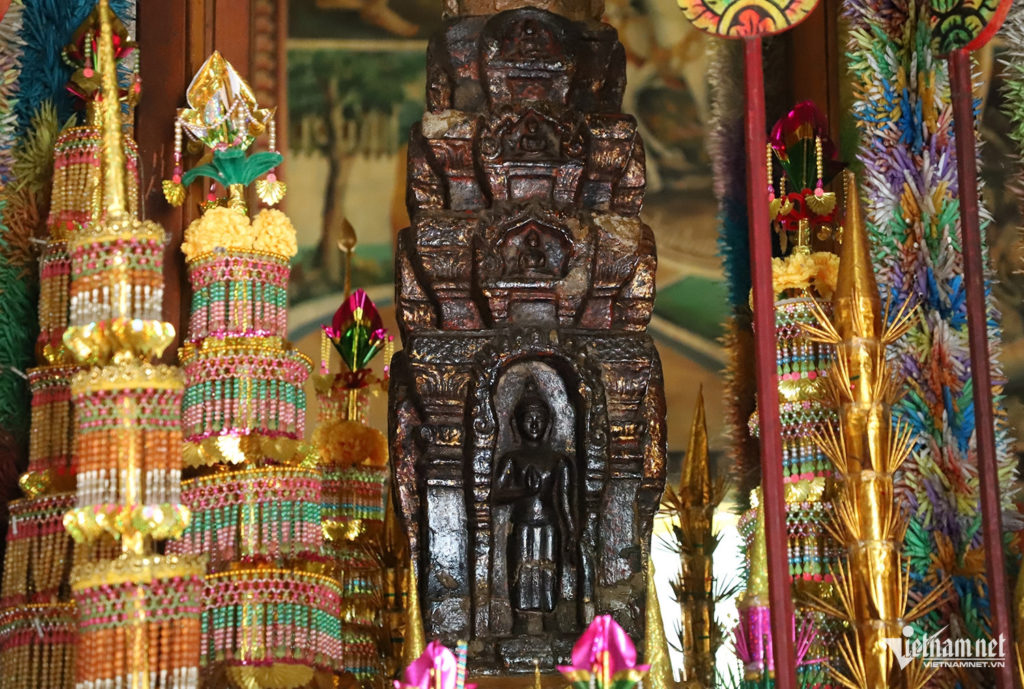
Local lore tells how Khmer settlers in the early 16th century discovered a four‑faced stone Buddha while clearing land. Interpreted as a divine omen, villagers built a modest shrine in 1537 to enshrine the statue. Over centuries, the temple has undergone three major renovations, evolving into today’s striking complex of halls, towers, ceremonial pavilions and monks’ residences.
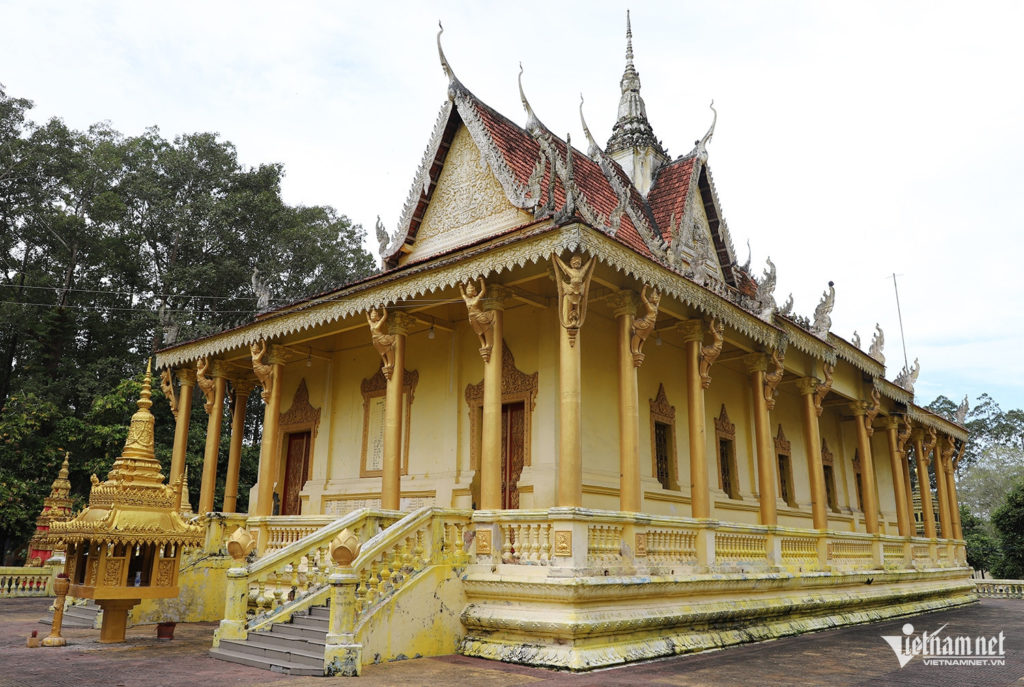
Architectural details reflect deep spiritual symbolism. Roof edges are carved into Naga serpents, while sculpted images of the goddess Kâyno adorn the lower sections. Garuda figures guard the junctions of roof and columns, embodying strength and protection. The Mach Cha Ling Pond, crowned by a 20‑metre tower, houses a Buddha seated upon a seven‑headed Naga serpent, surrounded by statues of the twelve zodiac animals.
Beyond its architecture, the temple grounds are home to centuries‑old Damask rose trees, regarded as living botanical treasures. Their presence adds to the site’s unique atmosphere, drawing visitors and heritage enthusiasts alike.
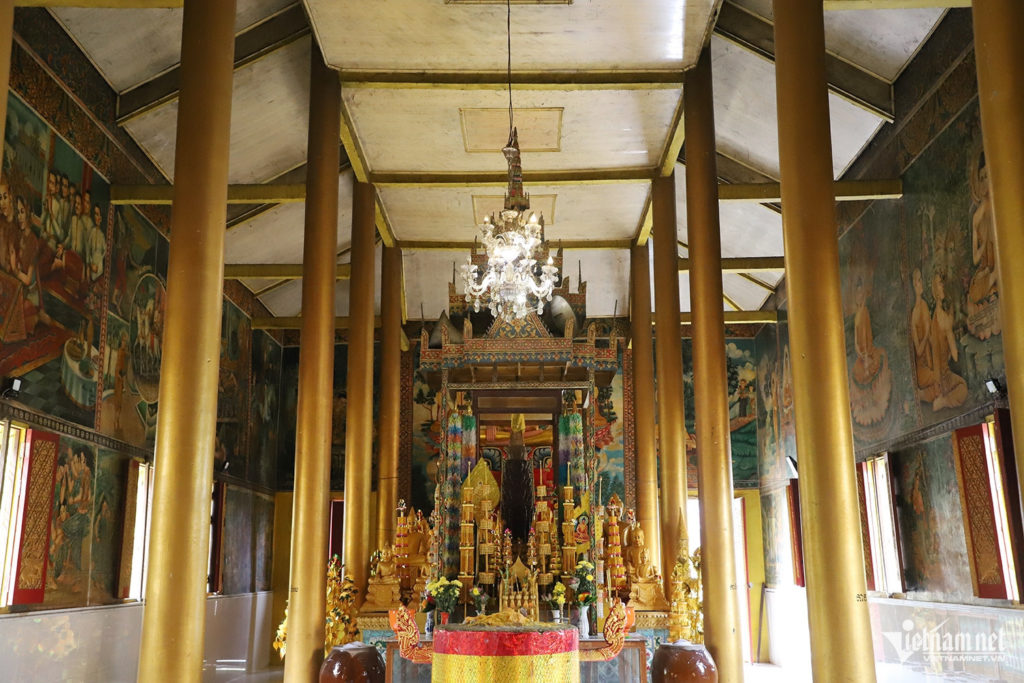
Inside the main hall, the Four‑Faced Buddha remains intact after nearly half a millennium, alongside a majestic two‑metre statue of Shakyamuni Buddha atop a three‑metre pedestal. For the local Khmer community, the temple is more than a place of worship: it is a guardian of culture, memory and belief, preserving spiritual traditions across generations.
About the Author