A quiet artistic revival in Bodh Gaya is transforming the lives of hundreds of women, who are turning delicate Peepal leaves into striking images of Lord Buddha and intricate Mandalas — and, in the process, building a thriving cottage industry.
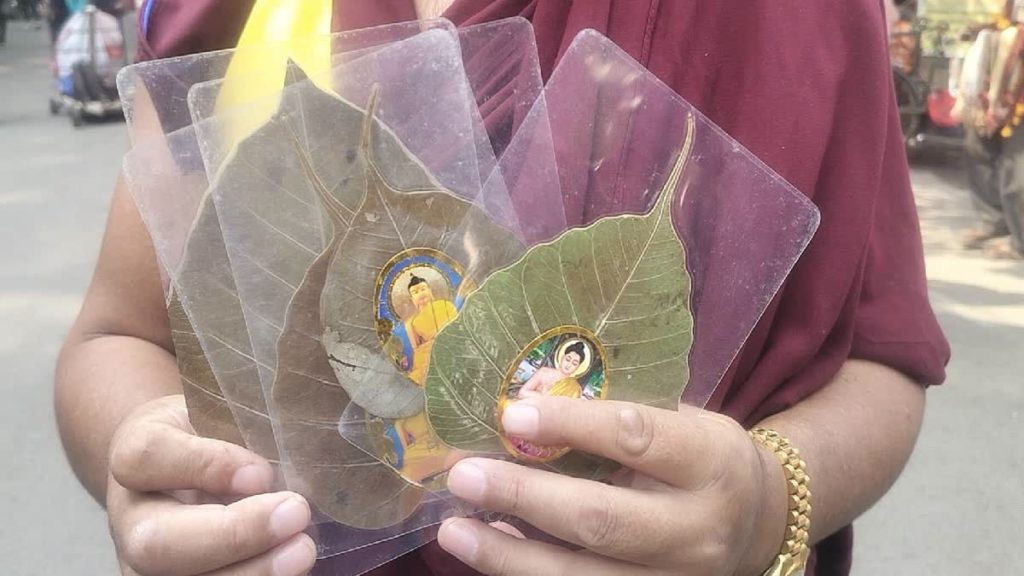
Around 500 women across villages such as Bhagalpur, Bhagwanpur, Tika Bigha and Mian Bigha now earn between Rs 10,000 and Rs 20,000 ($ 110 – $120) a month during the tourist season by producing these distinctive artworks from home. The craft draws on Bodh Gaya’s deep spiritual heritage: the Peepal tree under which Buddha attained enlightenment remains central to local devotion, and its leaves have long been used for religious art.
For many women, the work represents both income and independence. “We’ve seen poverty and financial constraints,” said Sudha Singh, a community resource worker who helps train others. “I do this in my spare time and encourage women to become self‑reliant.”
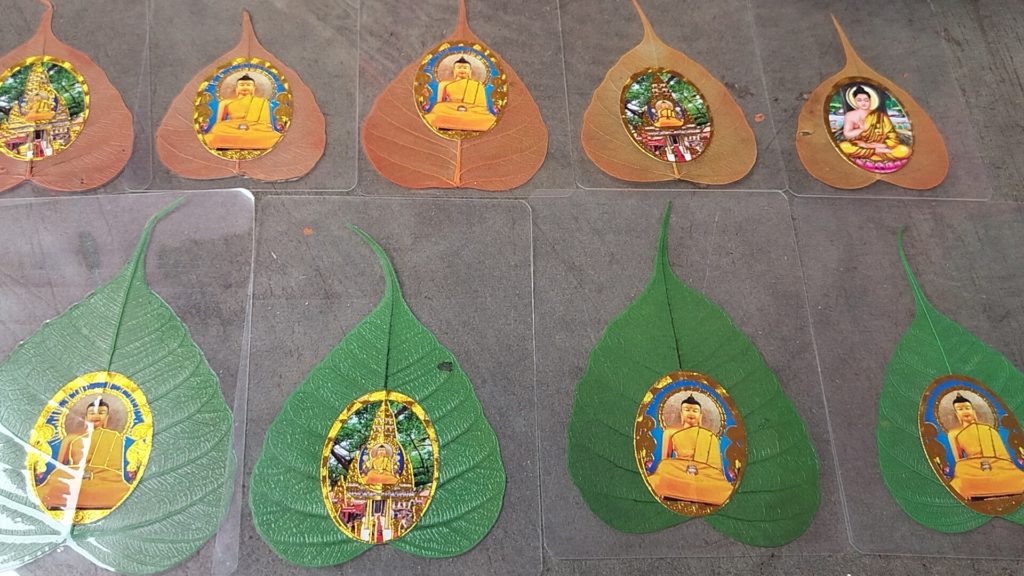
The process is painstaking. Fresh Peepal leaves are soaked for two months until the outer layer dissolves, leaving a fine skeletal structure. Once dried and cleaned, the leaves are coloured, strengthened and then either painted by hand or decorated using pressed stickers. Some women specialise in Mandala designs, while others focus on Buddha imagery for bookmarks, diaries and framed pieces.
Training has spread through self‑help groups and local initiatives, with some women learning techniques from monks years ago. More than 400 artists now work in the simpler painted‑leaf style, selling pieces for Rs 10 to Rs 30, while more elaborate works — sometimes embellished with pearls — fetch Rs 80 to Rs 100 each. Mandalas range from Rs 30 to Rs 1,500, and during peak season some women earn Rs 25,000 to Rs 30,000.
The industry has created opportunities for men too, who often handle sales at markets and outside the Mahabodhi Temple, where around 30 sellers operate. Demand comes from across India and abroad, with tourists frequently buying in bulk. One Spanish visitor described the leaves as “sacred”, while a Tibetan Lama praised their craftsmanship and spiritual significance.
Orders now arrive from as far as Vietnam and Sri Lanka, and local artists estimate that around 2.5 million leaves were used this season alone. What began as a traditional craft has become a vital source of livelihood — and a powerful symbol of how sacred art can sustain a community.
About the Author