An ancient stone sculpture long overlooked at the Pidari Amman temple in Umbalacheri village, near Vedaranyam, has now been formally recognised as a Buddha idol. Researchers say the figure, carved from wheat‑brown stone, depicts the Buddha in serene meditation, seated in ardhapadmasana with elongated ears and a halo framing the head.
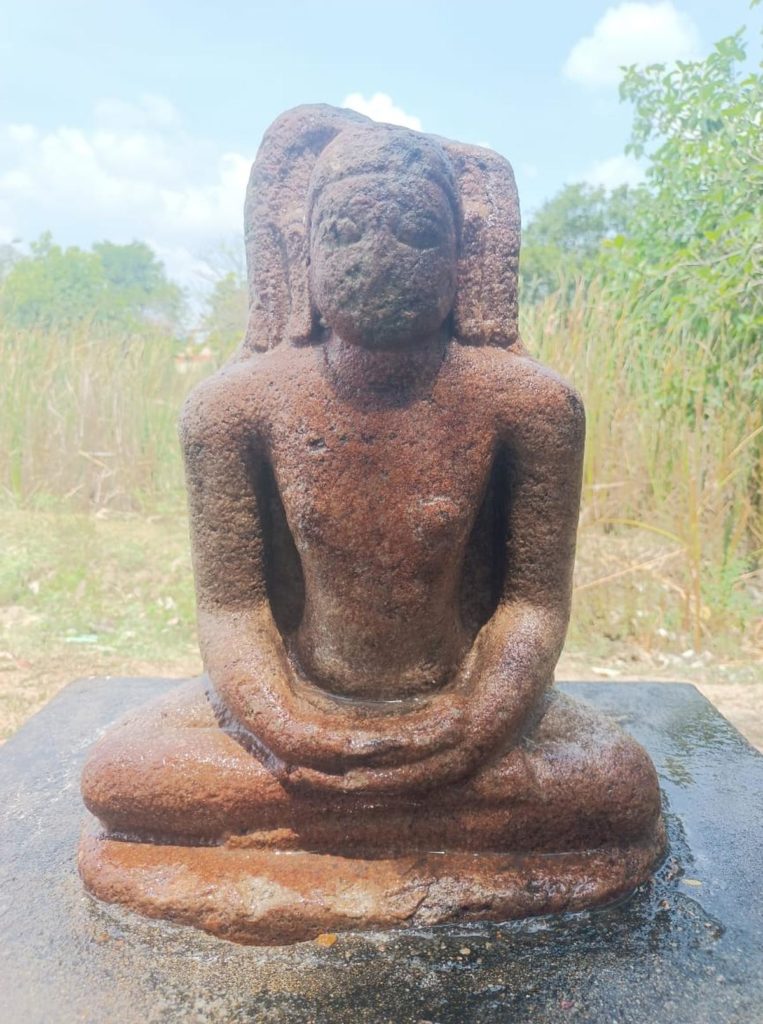
The statue, measuring 46 cm in height, shows traces of an ushnisha — the cranial protuberance typical of Chola‑era Buddhist iconography — and faint folds of a robe despite centuries of weathering. The find was documented by scholars Themmavur Nandan, Nalangkilli and Arul Muthukumaran, who emphasised its significance in mapping the Buddhist past of Nagapattinam district.
Officials from the Tamil Nadu Archaeology Department noted that the region has long been rich in Buddhist heritage, with historical viharas at Nagapattinam and Poompuhar. The Umbalacheri discovery adds to a growing list of statues across the district, including notable examples at Pushpavanam, Budhamangalam, Keeranthi and Velankanni.
K. Birla Thangadurai of the Buddhist Society of India described Nagapattinam as “Buddhist land” and urged the government to conduct a systematic survey to preserve and highlight this heritage. He warned that many such relics remain unknown to the public and risk being sidelined.
The identification of the Umbalacheri idol underscores the layered religious history of Tamil Nadu, where Buddhist traditions once flourished alongside Hindu temples. For historians and local enthusiasts, it is another reminder that the soil of Nagapattinam still holds centuries of dharma waiting to be rediscovered.
About the Author