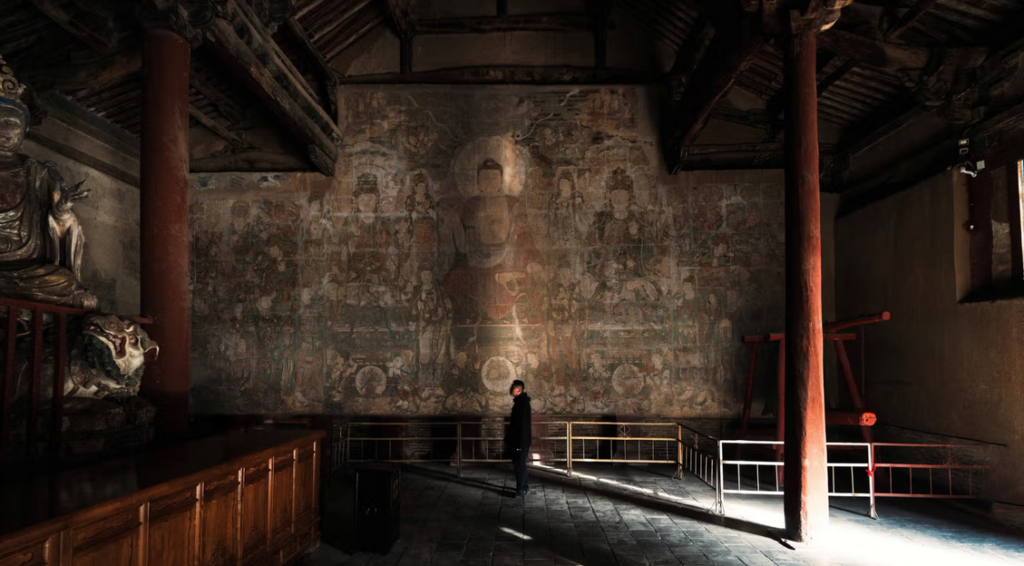
The Metropolitan Museum of Art in New York has launched a major conservation project on the monumental Buddha of Medicine mural, a centuries‑old masterpiece originally from Guangsheng Monastery in northern China.
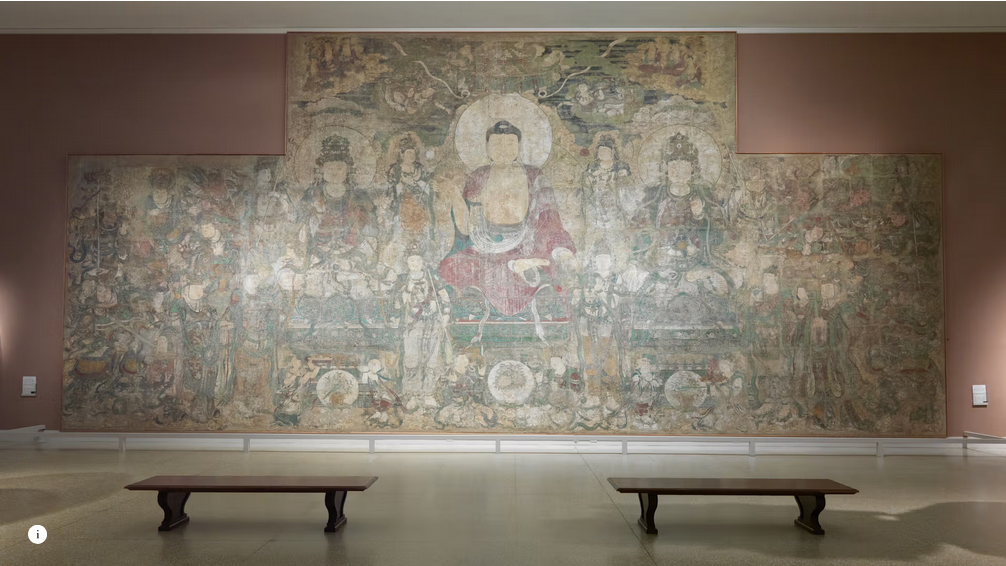
The restoration, undertaken in partnership with the Chinese National Academy of Arts, began in 2024 and is expected to take two years. Conservators are working to reverse decades of discolouration caused by adhesives applied during its 1964 installation, while correcting alignment errors made when the mural was reassembled from 274 fragments.
Painted between 1319 and 1324 after a devastating earthquake, the mural once adorned the monastery’s main hall in Shanxi Province. At its centre sits the Buddha of Medicine, surrounded by deities symbolising vows to cure illness, ensure safe childbirth and aid those in need. The work was created using plaster, clay and straw grounds, outlined in bold black lines and filled with vibrant vegetable and mineral pigments.
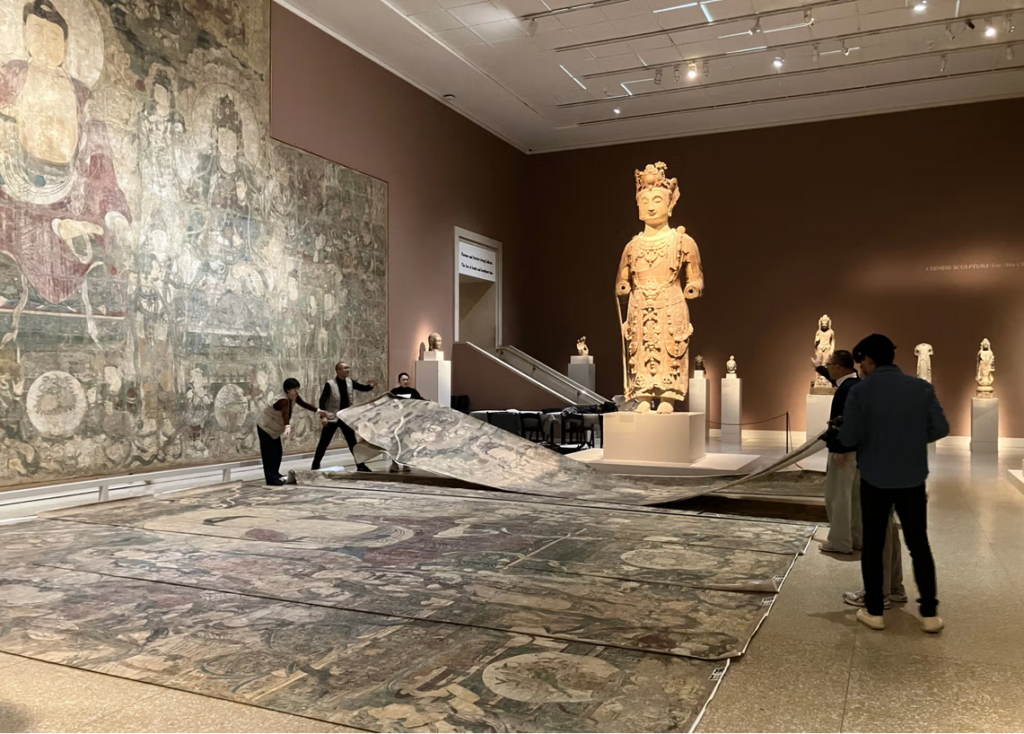
The mural’s journey to The Met reflects the turbulent history of Chinese art sales in the early 20th century. In 1929, local leaders agreed to sell murals to fund temple repairs. Several pieces were acquired by art dealer C. T. Loo, with sections now housed in museums across the United States, including Kansas City, Detroit and Cincinnati. The Met purchased its mural in 1954 from Frank Caro Co., Loo’s successor.
Today, conservators are combining curatorial research with advanced scientific analysis to safeguard the mural for future generations. The project not only addresses technical flaws but also deepens understanding of traditional Chinese mural techniques.
The initiative underscores The Met’s broader commitment to preserving global heritage, ensuring that the Buddha of Medicine continues to inspire visitors with its spiritual and artistic significance.
About the Author