Indonesia’s Buddhist youth have marked Vesak 2026 with a striking new record: a 5.6‑metre transparent Buddha statue unveiled inside one of Surabaya’s busiest shopping malls.
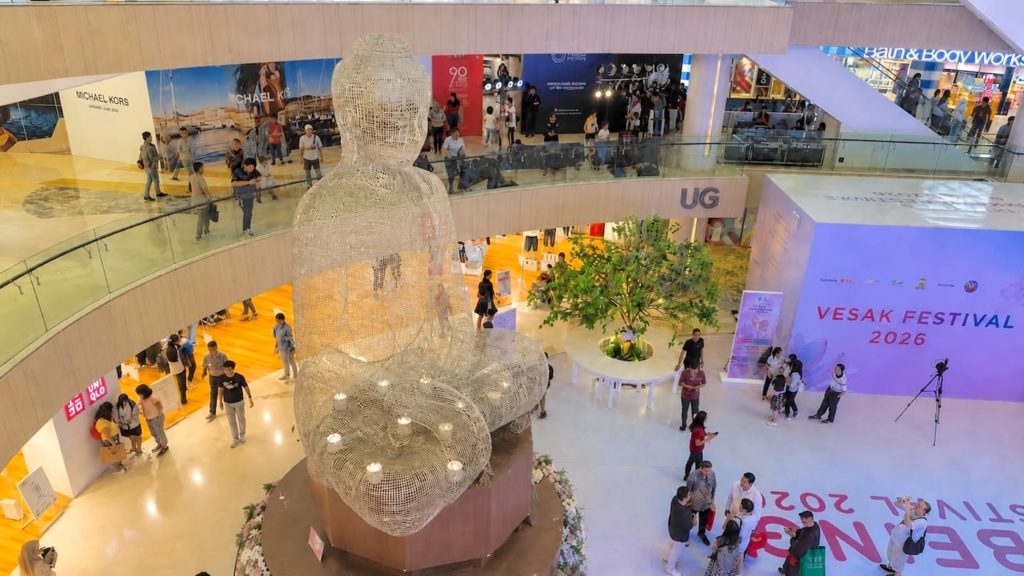
The installation, launched on 27 May by the Young Buddhist Association Indonesia (YBAI), has been recognised by the Museum Rekor‑Dunia Indonesia (MURI) as the nation’s largest transparent rupang, or Buddha image. Crafted from thousands of wire‑mesh knots by a Balinese artist, the sculpture embodies this year’s theme of “Interbeing: Our Happiness, Our Shared Responsibility.”
Festival organisers say the record is not about prestige but about outreach. “It is a medium to introduce the universal values of the Buddhist tradition to a wider public,” explained vice‑chair For Clea Alvina. By placing the statue in a mall, YBAI hopes to engage Indonesians of all faiths in a space where people naturally gather.
The Surabaya event runs until 31 May, before moving to Jakarta from 3–7 June. Alongside the statue, visitors can explore a 3D walk‑through installation designed to immerse them in the Buddhist idea of interconnectedness. MURI validator Paula described the work as “a symbol of interconnection—an awareness that self, others, and nature are all linked and mutually sustaining.”
For YBAI, the festival is about hospitality as much as devotion. “True generosity is not only material but the offering of space, attention, and a sense of welcome,” the group noted. In a country where Buddhists make up less than one per cent of the population, the association sees Vesak as an opportunity to open doors rather than draw boundaries.
This latest achievement continues YBAI’s streak of record‑breaking Vesak installations, following the tallest indoor Buddha image in 2023, the largest moving image in 2024, and the largest floating image in 2025. Since 2015, the festival has become one of Indonesia’s most visible expressions of public‑facing Buddhist life.
With Buddhism’s roots in the archipelago stretching back to the sixth century, the transparent Buddha in Surabaya is both a modern spectacle and a reminder of enduring traditions. For the organisers, the message is simple: the Dharma does not compel—it invites, offering stillness and compassion to anyone willing to pause and reflect.
About the Author