A centuries‑old Buddhist manuscript has become the centrepiece of a viral belief in Taiwan, with visitors flocking to Taipei’s National Palace Museum to glimpse what folklore claims can bring seven lifetimes of good fortune.
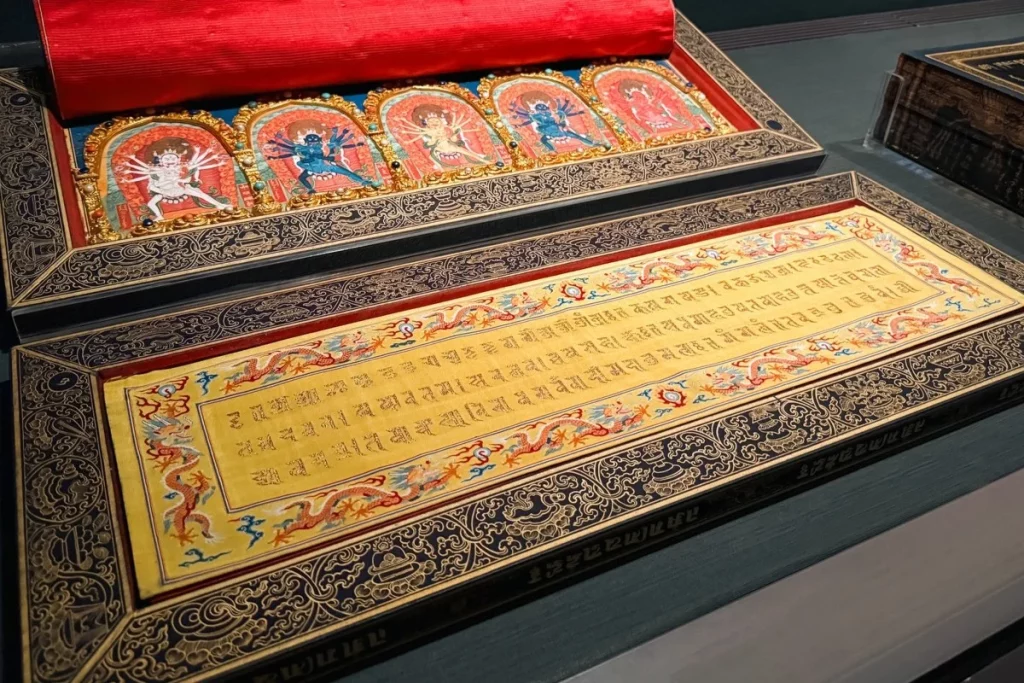
The Tibetan Dragon Canon, a monumental 108‑volume scripture commissioned in 1667 by the Kangxi Emperor at the request of his grandmother, Grand Empress Dowager Xiaozhuangwen, is being shown in a special exhibition until November. Written in gold ink on deep‑indigo paper, each volume is lavishly decorated with lacquered covers, embroidered wrappers and bejewelled icons.
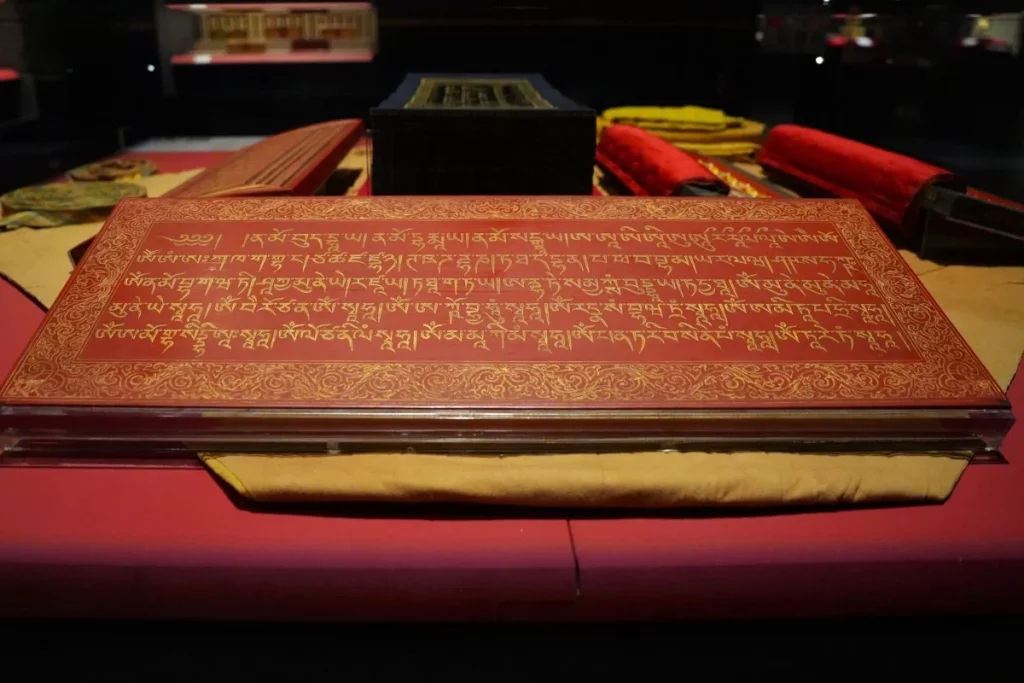
According to Qing dynasty records, the project cost more than 19 tonnes of silver and involved 171 lamas from Mongolia and Tibet. The canon is widely regarded as one of the most magnificent and best‑preserved collections of the Buddha’s teachings ever produced.
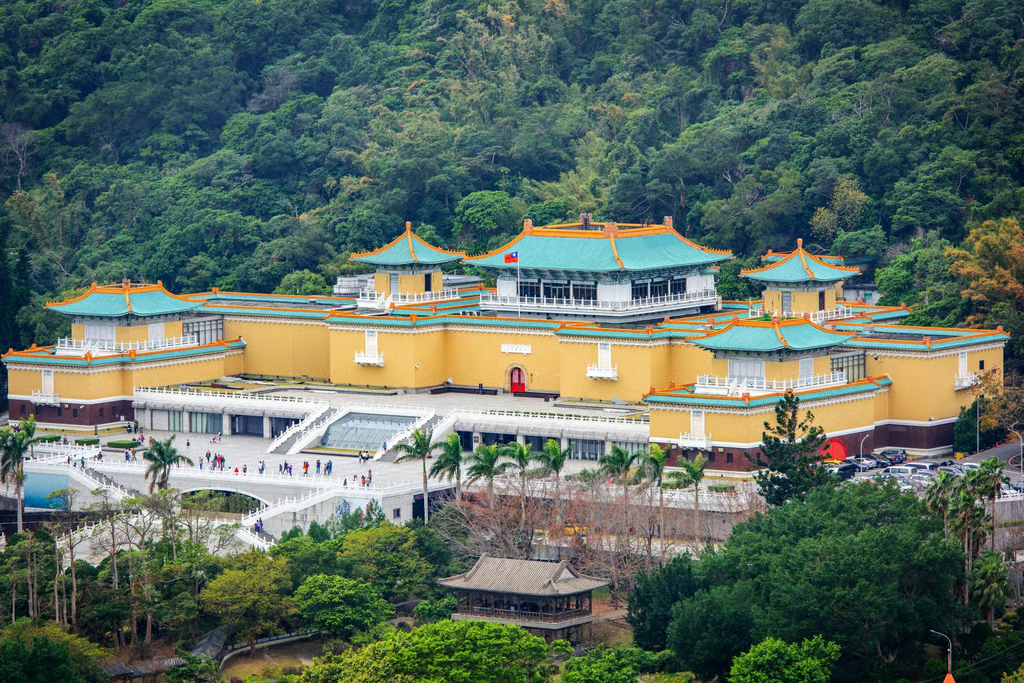
The exhibition has revived an old Chinese folk belief known as qishi fubao — that a single glimpse of the canon grants good karma for seven lifetimes. Social media posts have amplified the myth, with some visitors claiming they felt a powerful energy or goosebumps in its presence.
Historians say the canon was originally housed in the Forbidden City’s Cining Palace, suggesting it may have been intended for private devotion rather than public display. Yet its symbolism also reflected imperial power, binding Manchu and Mongol elites through shared reverence for Buddhism.
The National Palace Museum is now offering the rare chance to see multiple volumes together. While only one volume is usually displayed at the museum’s Southern Branch in Chiayi, plans are underway to move all 108 volumes into a transparent vault when a new building opens in 2028.
For believers, the exhibition is more than art or history — it is a chance to connect with a sacred text said to carry blessings across lifetimes. For others, it is a glimpse into the grandeur of Qing dynasty craftsmanship and the enduring power of Buddhist tradition.
About the Author