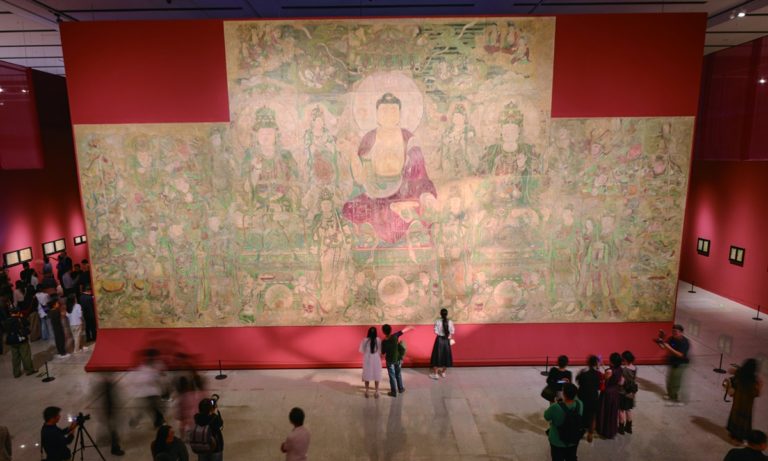
A striking replica of one of China’s largest lost murals has gone on display in Beijing after an unprecedented collaboration with New York’s Metropolitan Museum of Art. The Yuan Dynasty masterpiece, Buddha of Medicine Bhaishajyaguru, was originally housed at Guangsheng Temple in Shanxi before being sold abroad nearly a century ago.
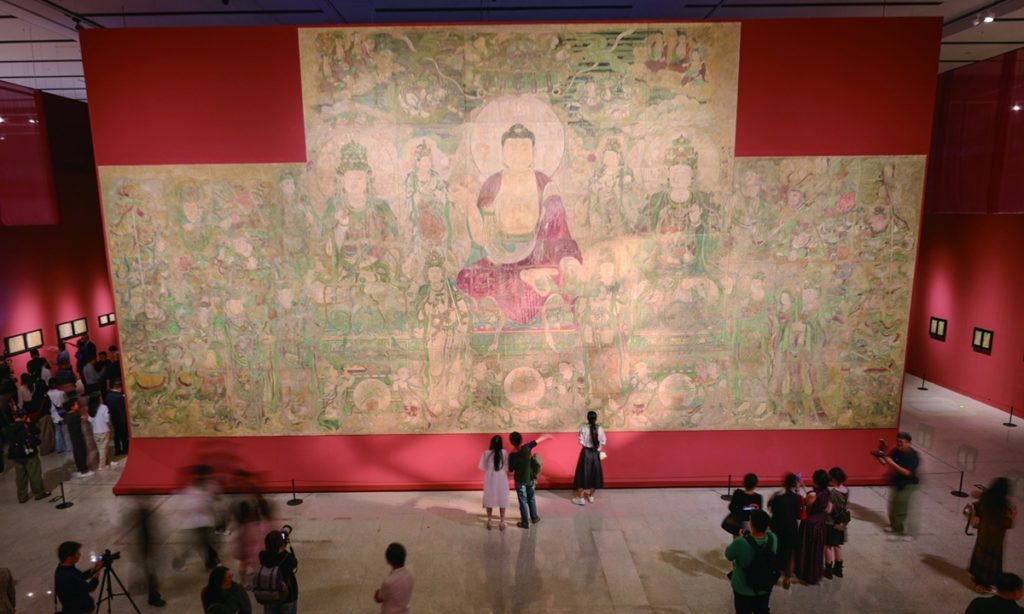
The original, split into 274 fragments and reassembled in New York, has long been a centrepiece of The Met’s collection. Now, after two years of painstaking work, Chinese researchers have recreated the mural in exacting detail, capturing every crack, seam and faded hue. “Our goal was a faithful record of what it looks like now, with all its wounds and all its history,” said Zhang Jian of the Chinese National Academy of Arts.
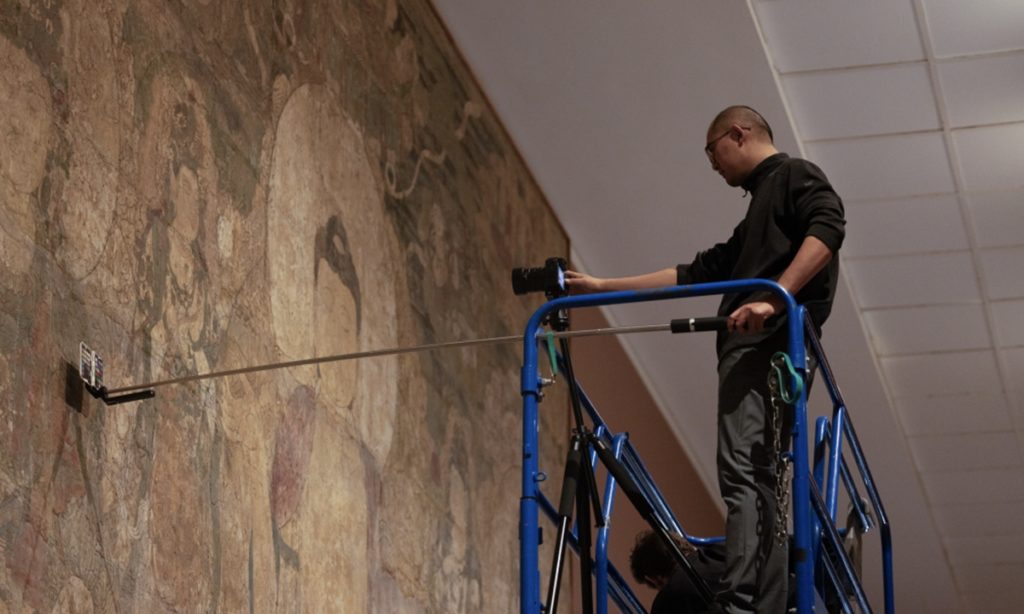
The replica, measuring over 15 metres long and seven metres high, opened last week at the China National Arts and Crafts Museum. Researchers combined ultra‑high‑definition imaging with traditional materials sourced from Guangsheng Temple to replicate the mural’s shallow‑relief texture.
The project marks a rare cultural exchange between Chinese and American institutions. Later this year, both sides will co‑host a symposium on the mural’s conservation, underscoring the significance of the collaboration.
For visitors in Beijing, the replica offers a chance to experience the grandeur of a work that embodies resilience after a medieval earthquake and centuries of Buddhist devotion. For scholars, it represents a bridge across borders — a shared effort to preserve and revive one of China’s most important artistic treasures.
About the Author