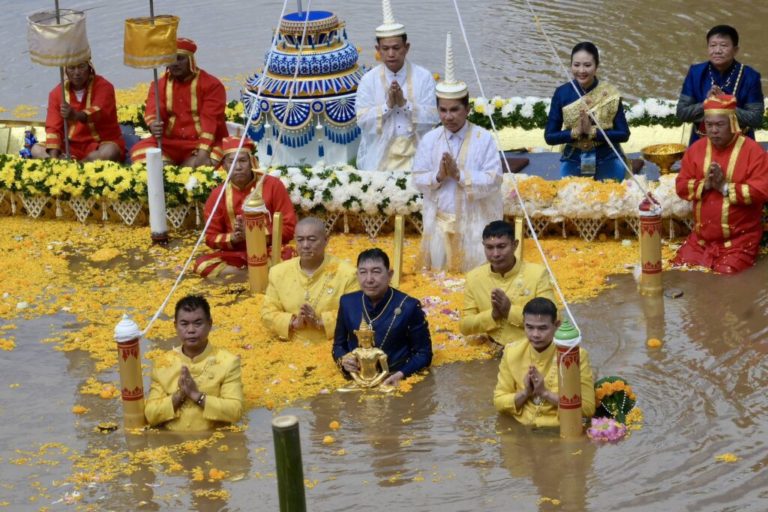
At Keo Village in Hanoi’s Thuan An commune, one of the most cherished traditions continues to draw crowds and bind generations together. The ancient “Robing the Buddha” ritual, preserved as part of the Keo Village Festival, sees monks, elders and villagers gather to ceremonially dress Buddha statues in fresh robes, accompanied by incense, drumbeats and offerings.
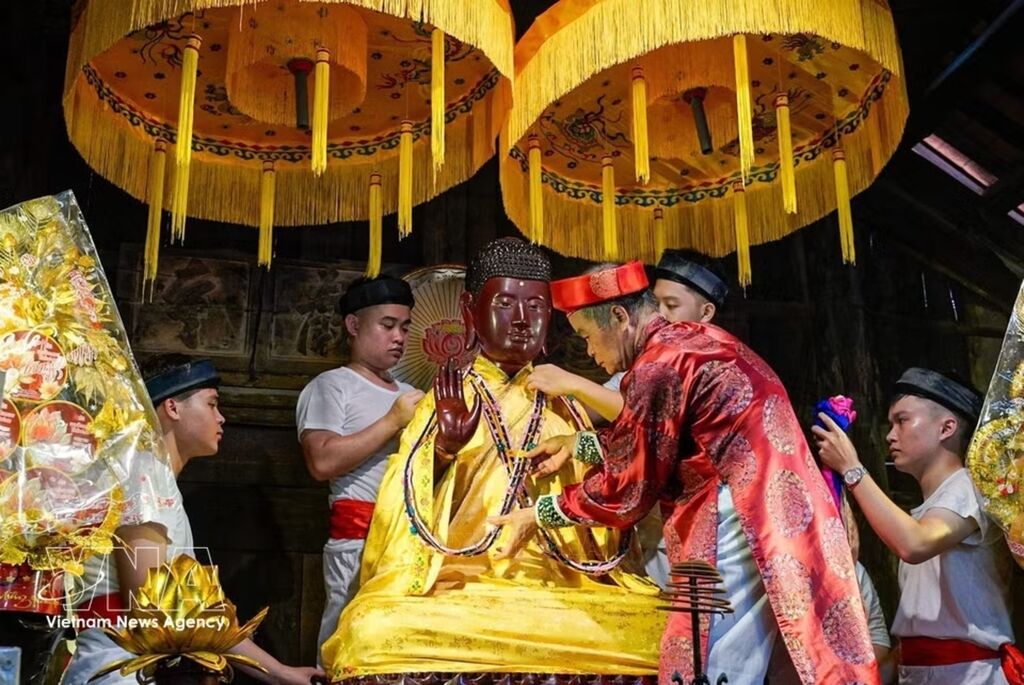
The ceremony is regarded as the spiritual heart of the festival. Every gesture follows age‑old customs, symbolising reverence for Buddhism and the community’s determination to safeguard its heritage. For younger villagers, it is both a lesson in cultural continuity and a chance to take part in a practice that has survived centuries of change.
Beyond the ritual itself, the festival atmosphere is vibrant: flags flutter, palanquins are carried in procession, and other rites such as life‑release ceremonies reinforce Buddhist compassion. Together, these elements create a living tapestry of Hanoi’s cultural identity.
What makes the “Robing the Buddha” ceremony remarkable is its resilience. Despite urbanisation and modern pressures, Keo Village has kept the tradition alive, ensuring that the spiritual depth and communal solidarity it represents remain intact. For Hanoi, the festival is not only a religious gathering but also a cultural showcase, reminding residents and visitors alike that some of the city’s most enduring values are found in its villages.
In essence, the ritual is more than a symbolic act of devotion—it is a testament to the strength of community and the continuity of tradition in Vietnam’s capital.
About the Author