For centuries, Tibetan bronze statues have been revered as sacred objects, their inner contents sealed away during elaborate consecration rituals. Now, modern science is offering a glimpse inside without disturbing their integrity.
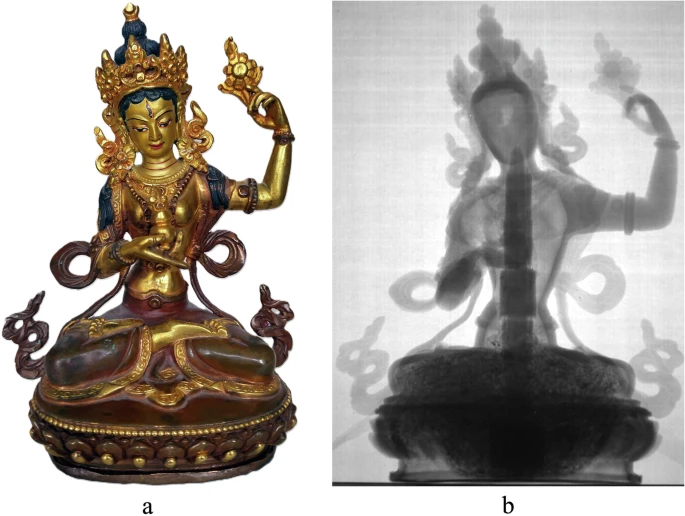
A new study highlights how neutron imaging – a nuclear analytical technique more often used in medicine and industry – is being applied to Tibetan Buddhist and Bon artefacts. The method allows researchers to peer inside statues, revealing hidden scrolls, ritual objects, and sacred materials that were placed during consecration ceremonies.
Traditionally, Tibetologists relied on texts, iconography and fieldwork to understand votive art. But these approaches could never uncover what lay within the statues themselves. Neutron imaging changes that, exposing the internal structures while leaving the artefacts untouched.
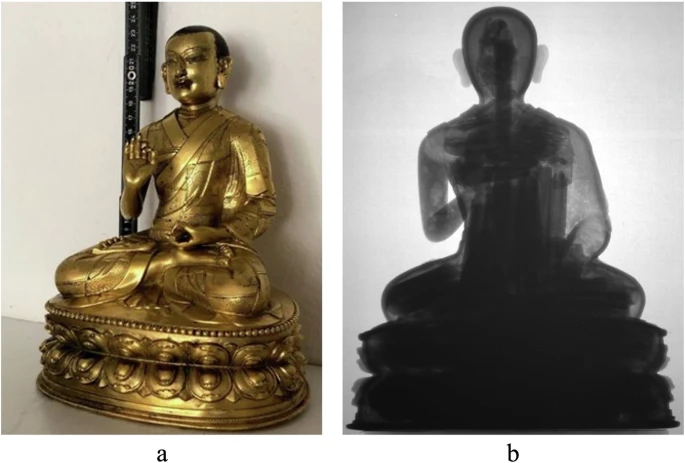
The practice of filling statues with mantras, tsa-tsas (miniature clay stupas), precious stones, grains, incense and even “life trees” made of wood has long been central to Tibetan religious life. Yet much of this ritual knowledge was passed down orally, leaving gaps in the historical record. By revealing the concealed contents, neutron imaging helps bridge those gaps, offering insights into both ancient and contemporary practices.
The research underscores the importance of interdisciplinary collaboration. Neutron specialists handle the technical side – preparing instruments, acquiring data, and producing visualisations – while Tibetologists interpret the findings in cultural and historical context. Together, they are uncovering details that could reshape understanding of Tibetan religious traditions.
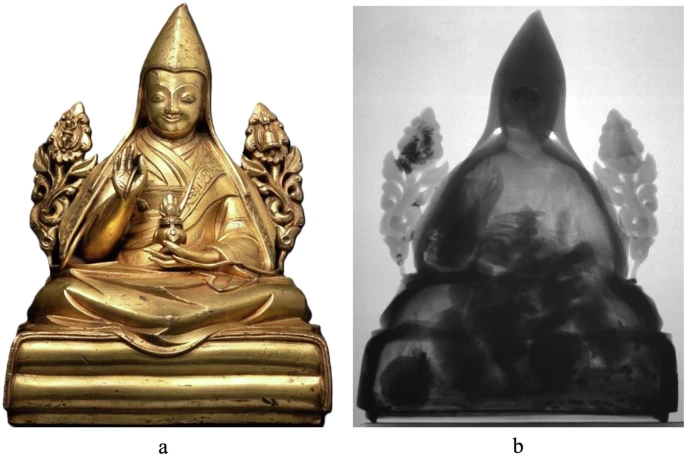
Beyond scholarship, the work carries cultural significance. Tibet’s monasteries and votive objects suffered immense destruction during the Chinese Cultural Revolution, and many practices remain under threat. Preserving and documenting the hidden layers of these statues is not only about science, but about safeguarding a heritage that has endured centuries of upheaval.
As neutron imaging continues to evolve, it promises to reveal more of the unseen world inside Tibetan bronze statues – a quiet revolution in both cultural preservation and the study of faith.
About the Author