In a quiet industrial block in Kwai Chung, the Siu family are keeping alive one of Hong Kong’s most endangered crafts: the carving and restoration of wooden deity statues. Their workshop, Hop Keung Cheong Kee, is now the territory’s last dedicated site for this fading art.
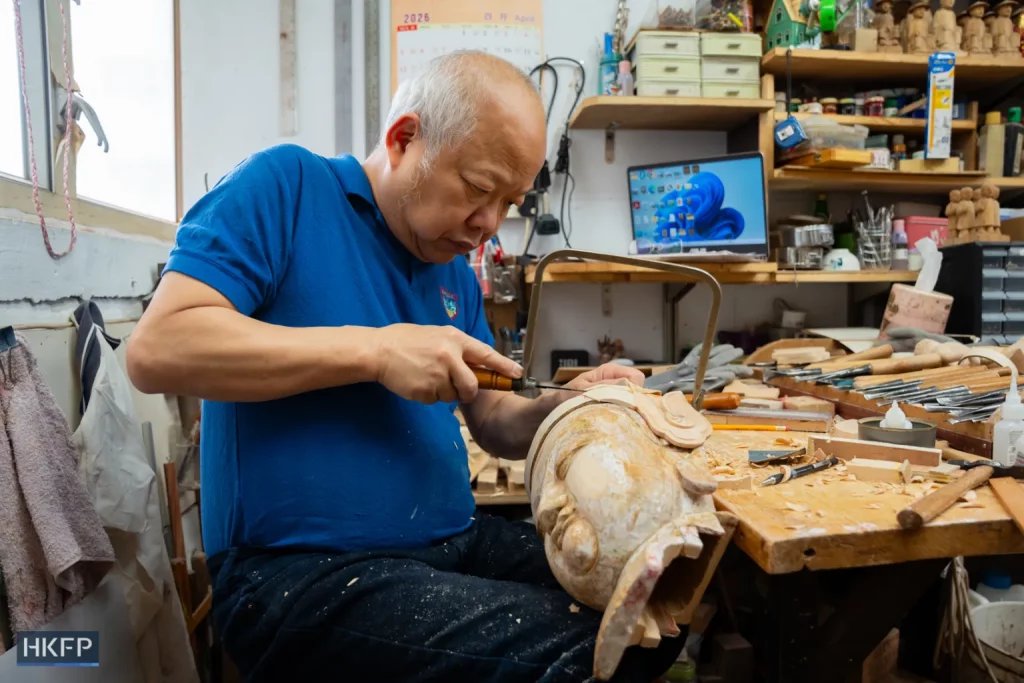
Vitus Siu, 69, learned the trade as a boy in the 1970s at his father’s shop in Yau Ma Tei. Today, alongside his son Sylvester and other family members, he continues to carve Buddhas and immortals while focusing increasingly on restoration. “Clothes make the man, and gold makes the Buddha,” he says, as gold leaf is carefully applied to statues in reverence.
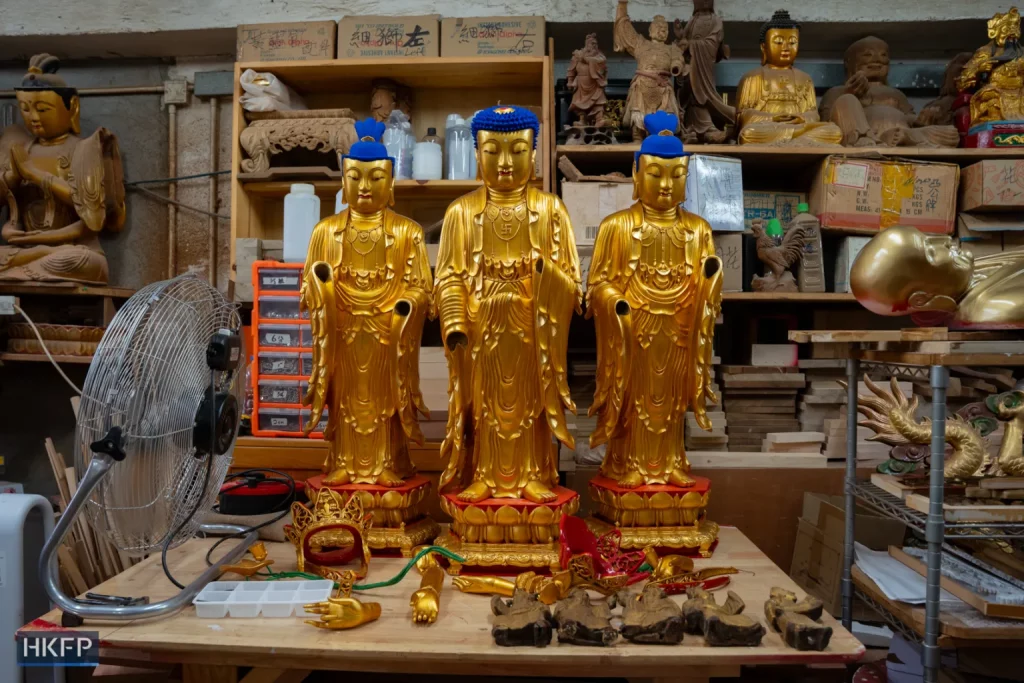
The family’s history stretches back to 1938, when Vitus’s father arrived from Guangdong and began carving “household Gods” for fishermen. Over the decades, fashions shifted: dragon and phoenix motifs for restaurants in the 1980s, then competition from cheaper mainland factories. One by one, rivals disappeared, leaving the Sius as the last guardians of the tradition.
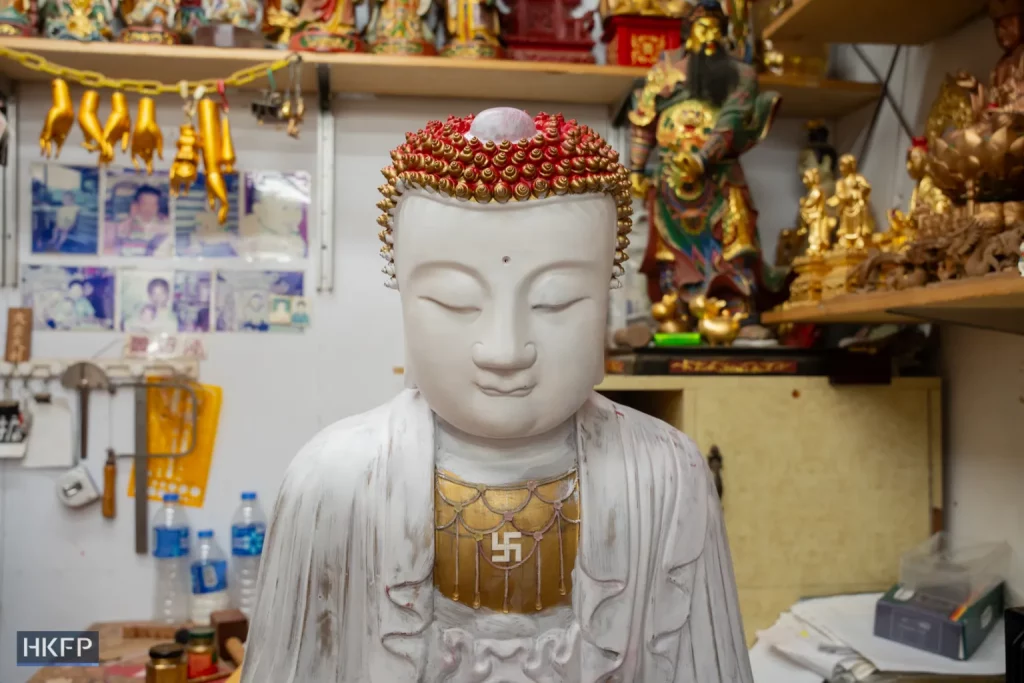
Sylvester, 37, returned to the craft in 2014 after a family accident and found fulfilment in restoration. His proudest moment came with the six‑metre Amitabha Buddha at Po Lin Monastery. “I feel a deep sense of fulfilment when I successfully restore a historic statue,” he says.
Today, restoration accounts for up to 80 per cent of their work, with projects closely monitored by the Antiquities and Monuments Office. Their workshop is fully booked, testament to the demand for skilled hands that mainland factories cannot replicate.
While Sylvester focuses on temple commissions, Vitus has begun experimenting with creative wooden artworks, even publishing a book on the craft. Yet he insists retirement is not an option. “Those who carve Buddhas can never retire, or they’ll pass away quickly,” he says with a smile.
In a city where many traditions have faded, the Siu family’s persistence offers a rare glimpse of continuity. Their chisels and gold leaf keep Hong Kong’s spiritual heritage alive, one statue at a time.
About the Author