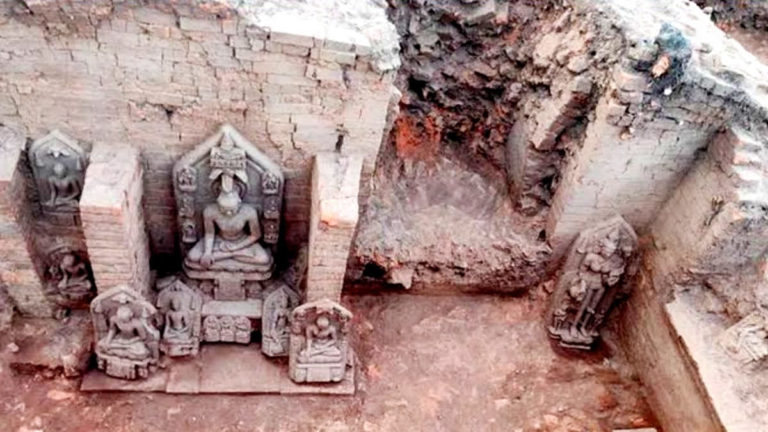
A 2,000‑year‑old Buddhist heritage site in Jammu and Kashmir’s Baramulla district could face collapse by 2050 if urgent conservation measures are not taken, according to a new study.
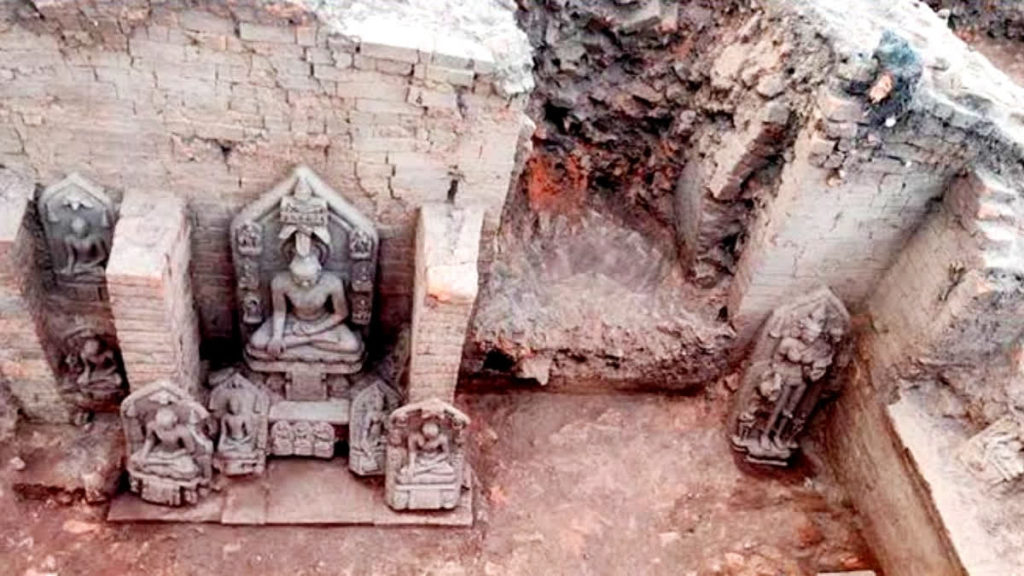
Located in Zehanpore village, just 10 km from Baramulla town, the archaeological complex sits on the right bank of the Jhelum River. Researchers from the University of Kashmir warn that decades of erosion have brought the river dangerously close to the site’s main stupa.
Using satellite imagery from 1976 to 2022, the study found sharp variations in erosion rates. Between 1989 and 2000, annual land loss surged to 3,600 square metres, largely due to riverbed mining and infrastructure projects. Although erosion slowed after 2000, the cumulative loss has left the complex highly vulnerable. Projections suggest another 10,000 square metres could vanish by 2050 if no action is taken.
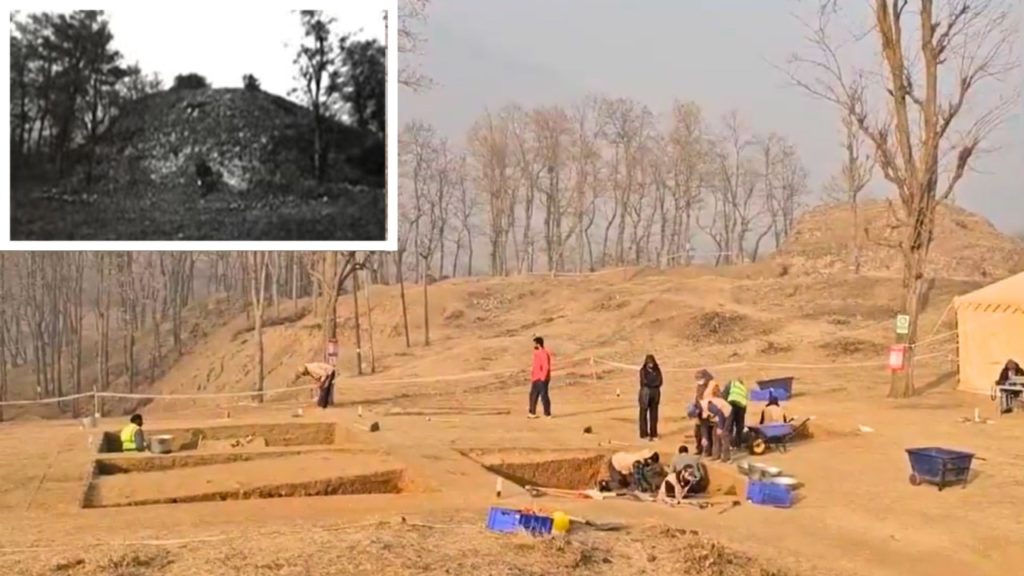
The Zehanpore site comprises three linearly aligned stupas, believed to have been part of an ancient network linking Kashmir with Gandhara and Central Asia. Historical accounts connect the wider Baramulla‑Ushkur area to the travels of the Chinese monk Xuanzang in the seventh century.
The study calls for immediate interventions, including gabion protection walls and planting deep‑rooted native vegetation to stabilise the soil. Without such measures, the primary stupa could be seriously compromised within decades.
The site has drawn national attention. In December 2025, Prime Minister Narendra Modi highlighted the discovery of large stupas at Zehanpore in his Mann Ki Baat radio programme, describing it as a “proud moment” for Jammu and Kashmir and a reflection of India’s deep civilisational roots.
In short: unless urgent conservation begins, one of Kashmir’s most significant Buddhist monuments may not survive beyond mid‑century, eroded away by the relentless flow of the Jhelum.
About the Author