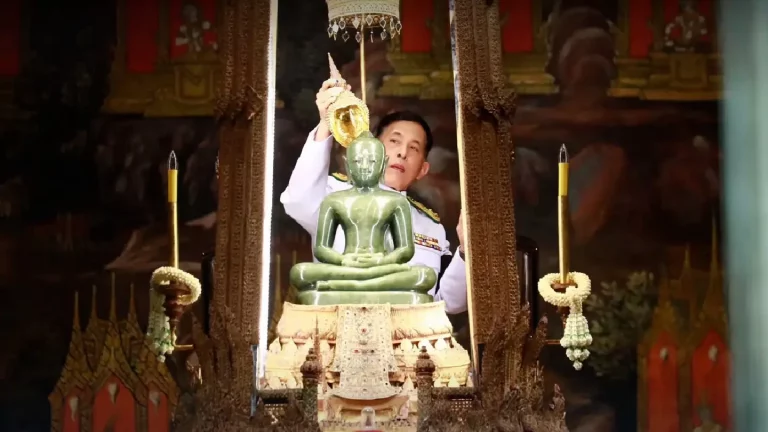
Thailand’s most revered religious icon, the Emerald Buddha, was ceremonially dressed in its winter attire on Wednesday as King Maha Vajiralongkorn presided over an ancient royal ritual at Bangkok’s Grand Palace.
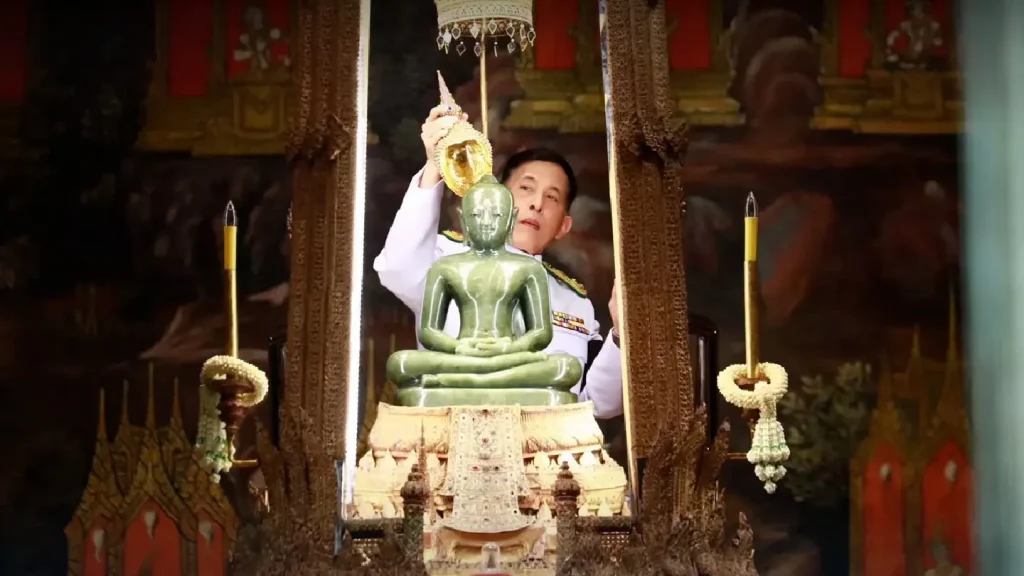
The centuries-old ceremony, held at the Temple of the Emerald Buddha, marks the transition between Thailand’s seasonal periods and highlights the sacred status of the famed image, which is regarded as a powerful symbol of the nation and the monarchy.
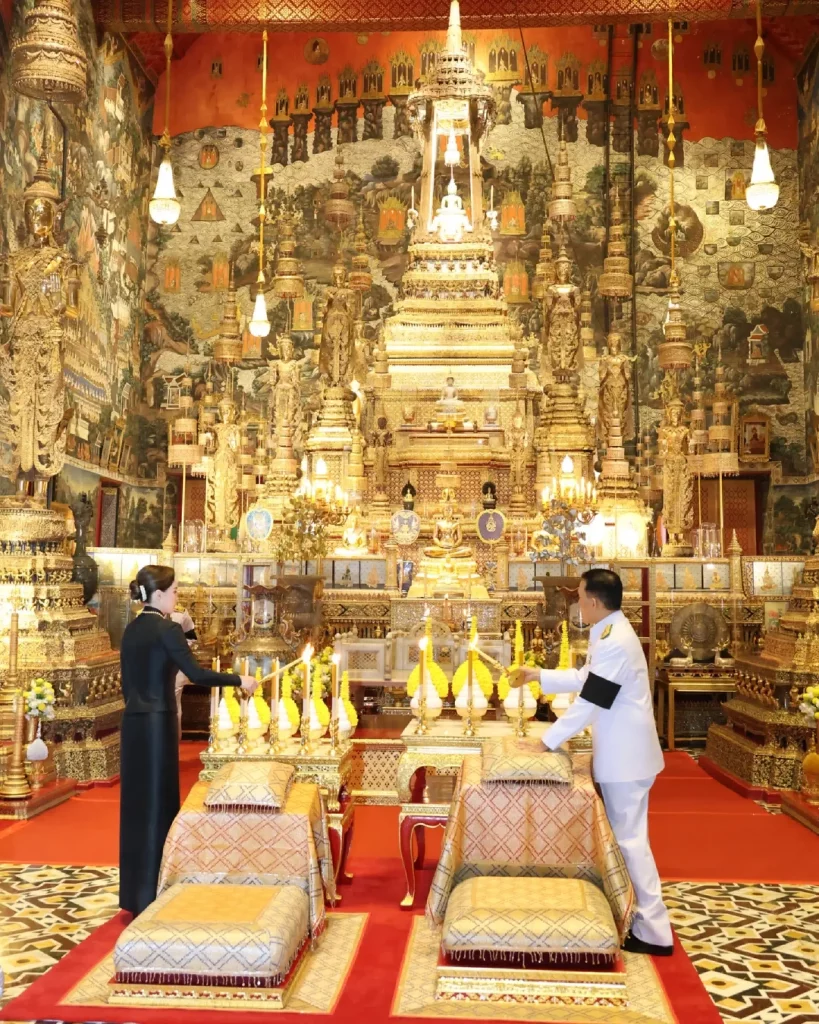
During the ritual, the King ascended to the shrine housing the Emerald Buddha and carefully removed its rainy-season crown. He then bathed the statue’s shoulders with scented water using ceremonial conch shells before gently drying the image and placing its winter crown upon its head.
The Emerald Buddha, despite its name, is carved from a single piece of green jade rather than emerald. Standing just 66 centimetres tall, it is one of Thailand’s most treasured religious artefacts and has been housed at Wat Phra Kaew since the reign of King Rama I in the late 18th century.
Only the King is permitted to change the statue’s seasonal adornments, a tradition performed three times a year. The robes are changed to correspond with Thailand’s hot, rainy and cool seasons, with each costume crafted in gold and richly decorated to reflect the significance of the occasion.
Queen Suthida joined the ceremony, which was attended by members of the royal family, senior officials and religious representatives. After the bathing ritual, water used in the ceremony was distributed as a blessing, first among those inside the ordination hall and later to members of the public gathered outside.
The ritual blends Buddhist devotion with royal tradition, reinforcing the close connection between the Thai monarchy and the country’s dominant faith.
For many Thais, the changing of the Emerald Buddha’s robes is more than a ceremonial event. It serves as a visible reminder of continuity and tradition, centred on a statue that has stood at the heart of Thai spiritual and national identity for generations.
About the Author