Jao Tsung-I (1917–2018) was one of China’s great cultural figures — a scholar, painter and calligrapher who believed the true essence of Dunhuang lay not in its dazzling colours but in its disciplined linework. His lifelong devotion to the caves’ Buddhist art helped revive a tradition that had risked being overshadowed by foreign scholarship and modern neglect.
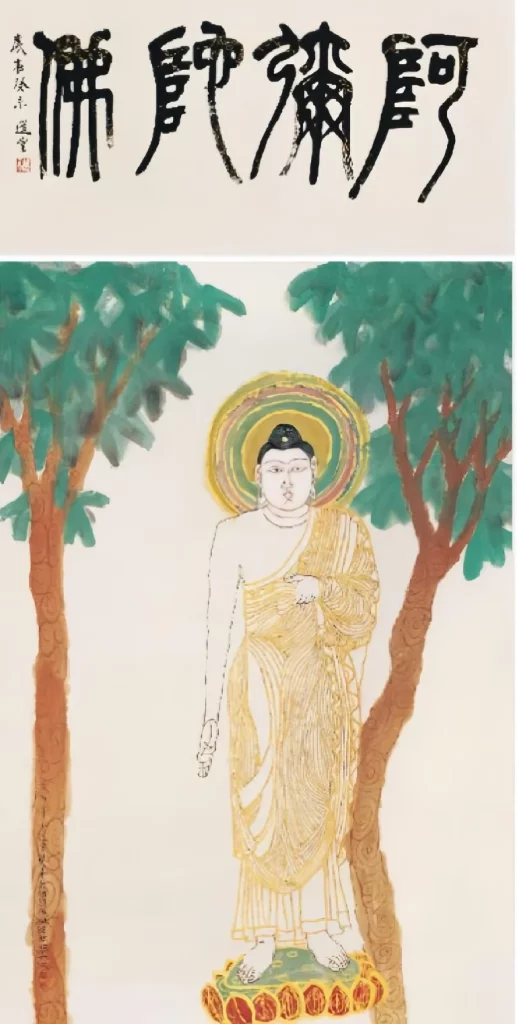
The Mogao Caves, carved over 1,600 years, are famed for their celestial murals of Buddhas and bodhisattvas. Yet Jao looked past the spectacle, focusing on the plain‑line drawings of the Sui and Tang dynasties. For him, each stroke was meditation made visible, a bridge between form and emptiness. His baimiao works stripped away ornamentation to reveal the spiritual heart of Dunhuang.
Jao’s journey began in the 1940s, when he met Zhang Daqian, the legendary painter who had copied Dunhuang’s murals in colour. Zhang recognised Jao’s gift for line and urged him to study hidden sketches preserved on manuscripts. Jao travelled to Paris and Tokyo in the 1960s to examine scrolls, and in 1975 published Dunhuang Baimiao, establishing line study as a field in its own right.
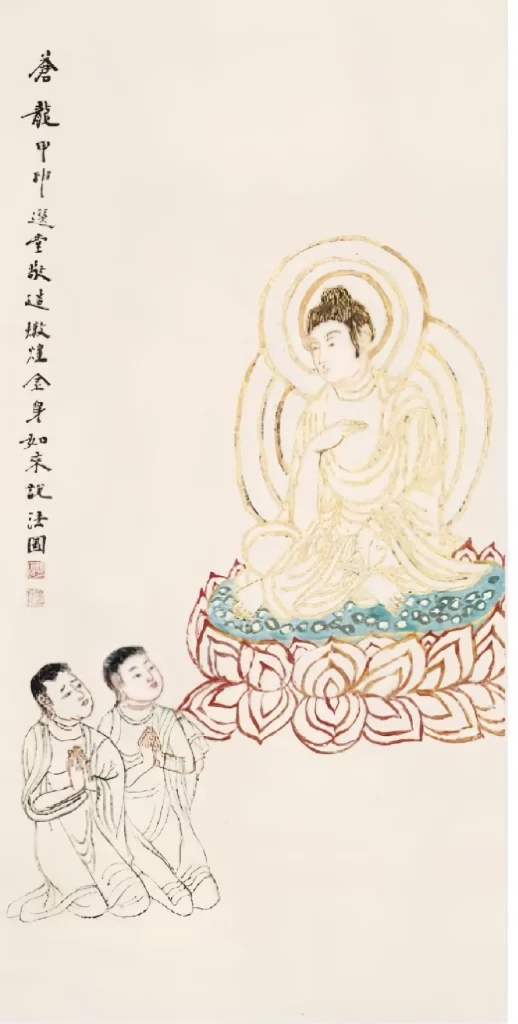
Drawing inspiration from Zhao Mengfu and Bada Shanren, Jao forged a style that was both scholarly and original. His baimiao figures and bird‑and‑flower motifs were not mere reproductions but living re‑imaginings, revealing discipline and devotion in every mark.
Alongside his drawings, Jao practised daily calligraphy of the Heart Sutra, especially during times of disaster. In 2005, his mature script was carved into 38 wooden pillars on Lantau Island, forming an infinity path beside the Tian Tan Buddha — a landscape of Dharma where visitors walk among his words.
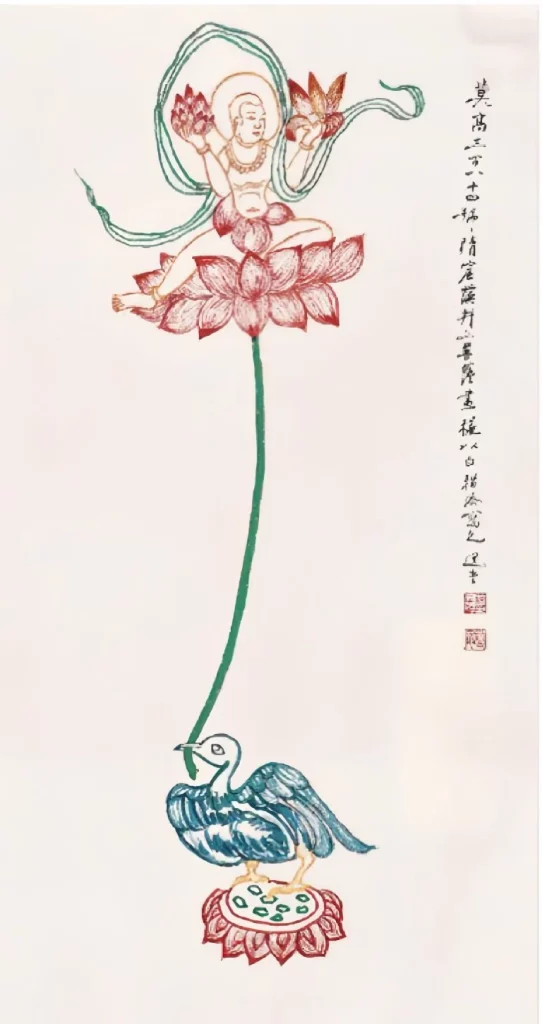
Later, he turned to Chan painting, reviving neglected traditions of the Song and Yuan masters. His bold, economical strokes channelled spiritual immediacy, showing how enlightenment could live in a single brushline. He even extended Dunhuang’s influence to landscapes, applying its disciplined lines to deserts and mountains in works like Grand Canyon of Kucha.
Jao’s “infinite line” was more than art: it was practice, devotion and awakening. In his baimiao bodhisattvas and Heart Sutra pillars, he distilled centuries of Buddhist heritage into strokes that continue to resonate. For modern audiences, his work offers not just beauty but a path — a reminder that in simplicity lies the presence of the Dharma.
About the Author